
Learning About National Cyber Resilience at BSSN: My Notes from the 2026 CSIRT Seminar
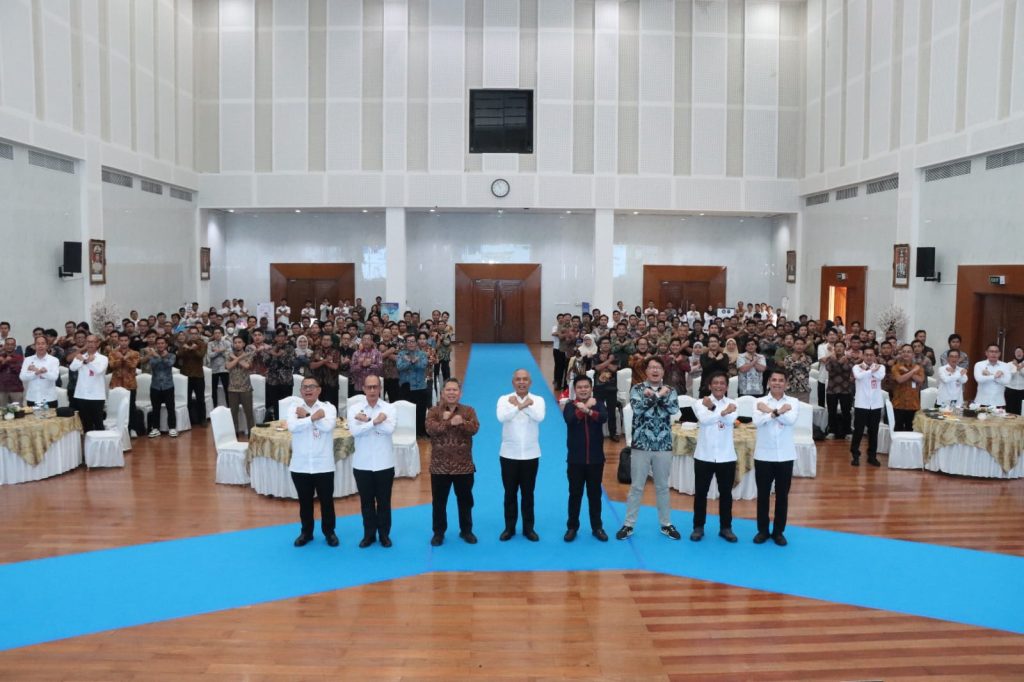
On Tuesday, May 5, 2026, I had the opportunity to attend the 2026 Cyber Incident Response Team (TTIS/CSIRT) Seminar for Central Government Organizations, held at the Mayjen. dr. Roebiono Kertopati Auditorium, BSSN Sawangan, Depok, West Java.
As someone working in IT Support and Public Communication at the Labuan Bajo Flores Tourism Authority (BPOLBF)—and also someone who has always been enthusiastic about technology and cybersecurity—this experience became personally meaningful and insightful for me.
The seminar was not merely about cyber threats. It opened a broader perspective on how cybersecurity today has become part of national resilience and digital sovereignty.
When Cybersecurity Becomes Everyone’s Concern
In the opening session, dr. Sulistyo, Deputy for Government and Human Development Cyber and Crypto Security, explained that the workshop and seminar aimed to develop government civil servants (ASN) who are capable of handling cyber incidents professionally.
One point strongly resonated with me:
digital transformation without capable human resources will eventually become a vulnerability.
Today, nearly everything relies on digital systems:
government services, businesses, SMEs, communication platforms, and public information networks.
But alongside this rapid digitalization comes increasingly complex cyber risks.
“Trust” as the Foundation of the Digital Era
One of the strongest messages came from the Head of BSSN, Drs. Nugroho S. Budi.
He emphasized that:
if an institution or business cannot guarantee data security, then trust, investment, and credibility will inevitably decline.
I personally found this statement very relevant.
Today, trust is no longer built solely through products or services—it is also built through:
- how data is protected,
- how systems are secured,
- and how organizations respond during digital crises.
He also highlighted the importance of:
- crisis management systems,
- cyber contingency planning,
- incident response procedures,
- and post-crisis evaluation mechanisms.
To me, this reinforced the idea that cybersecurity is not just an IT issue—it is also a matter of governance and institutional readiness.
When AI, Data Leaks, and Geopolitics Intersect
The keynote session by H. Oleh Soleh, Member of Commission I of the Indonesian House of Representatives (DPR RI), was particularly interesting because it connected cybersecurity issues with broader global developments.
He discussed:
- the rapid evolution of AI,
- the growing concern over sensitive data leaks,
- and how digital information can create multiple narratives and perspectives worldwide.
One example mentioned was the global attention surrounding the “Epstein Files” leak.
Regardless of whether such information is verified or not, the larger concern remains:
leaked sensitive data can create political, social, and geopolitical consequences.
He also stressed that Indonesia still needs to strengthen its national communication infrastructure, including satellite independence and strategic data security.
Cyber Resilience Cannot Be a Formality
Through discussions from various speakers, I realized that establishing a CSIRT or TTIS is not simply about forming a formal team on paper.
There are many critical components involved:
- Incident Response Plans,
- log monitoring and SIEM analysis,
- communication infrastructure,
- recovery systems,
- and operational continuity during crises.
I was particularly interested in discussions about:
- backing up server logs before shutdown,
- how SIEM systems analyze threat activity,
- and the importance of incident documentation for future mitigation efforts.
These may sound highly technical, but they are extremely important in real-world cybersecurity management.
Cyber Threats Are Becoming More Complex
The presentation from PT LEN Industri (Persero) was also eye-opening.
They explained how cyber threats today are no longer simple attacks, but increasingly sophisticated operations such as:
- ransomware,
- supply chain attacks,
- API attacks,
- and cross-border cyber threats targeting critical infrastructure.
It reminded me that cybersecurity today is not only about preventing attacks—it is also about:
- resilience,
- recovery,
- and ensuring operational continuity.
Interestingly, they also discussed technologies involving:
- artificial intelligence,
- radar systems,
- tactical communications,
- satellite technologies,
- and autonomous systems.
Technology is evolving rapidly, and human resources must evolve just as quickly.
My Personal Reflection
As someone who was once active in the open-source community and still deeply interested in technology, this seminar provided many valuable insights.
I strongly believe that:
Indonesia has many talented IT professionals, but the future challenge is not only technical capability—it is also about building integrity, collaboration, and collective awareness regarding digital security.
Because ultimately, digital transformation without strong cybersecurity will only create new vulnerabilities.
Protecting Indonesia’s Digital Future
After attending this seminar, one thing became even clearer to me:
cybersecurity is no longer a future issue—it is a present necessity.
And perhaps this is why the role of TTIS/CSIRT within government institutions is becoming increasingly essential:
not only to respond to cyber incidents,
but also to build a culture of cybersecurity awareness across Indonesia.
For me personally, this experience was more than simply attending a seminar.
It was a reminder that behind every digital system we use every day, there is a major responsibility:
to keep it secure, trustworthy, and beneficial for society.
Recent Posts
Topic
Search